Insulation parts
Tubes, spacers, washers, holders and support parts for electrical isolation and heat exposure.
HERUN manufactures alumina ceramic parts for insulation, wear resistance, high-temperature stability and chemical resistance. We produce 95% to 99% Al2O3 rods, tubes, rings, sleeves, washers, plates and drawing-based OEM components from drawings and samples.
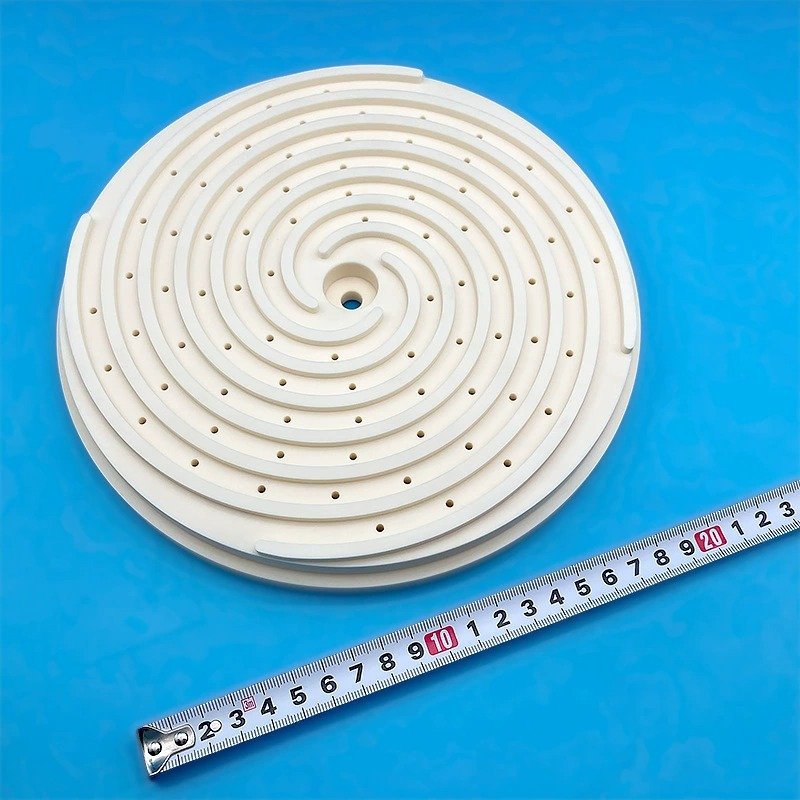
Use these categories as a starting point. Dimensions, purity, holes, slots, grinding and polishing can be customized for insulation, wear and high-temperature applications.
Single-bore and multi-bore tubes for insulation, thermocouple protection, furnace work and high-temperature supports.
Wear-resistant ceramic rods, positioning pins, plungers, guides and shafts with ground or polished surfaces.
Flat insulating plates, round discs, substrates, blocks and support parts in custom sizes and thicknesses.
Spacers, sleeves, washers, seal supports and round insulating parts for mechanical and electrical assemblies.
Alumina tubes, plates and custom pieces with multiple holes for electrical, heating and process equipment.
Special shapes made by pressing, sintering, machining, grinding, lapping or polishing according to the drawing.
95% alumina is often the best starting point for industrial parts. 99% alumina is considered when insulation, chemical stability or clean process requirements are more demanding.
For complex shapes, the final cost depends on whether the part can be formed near net shape or must be machined after sintering.
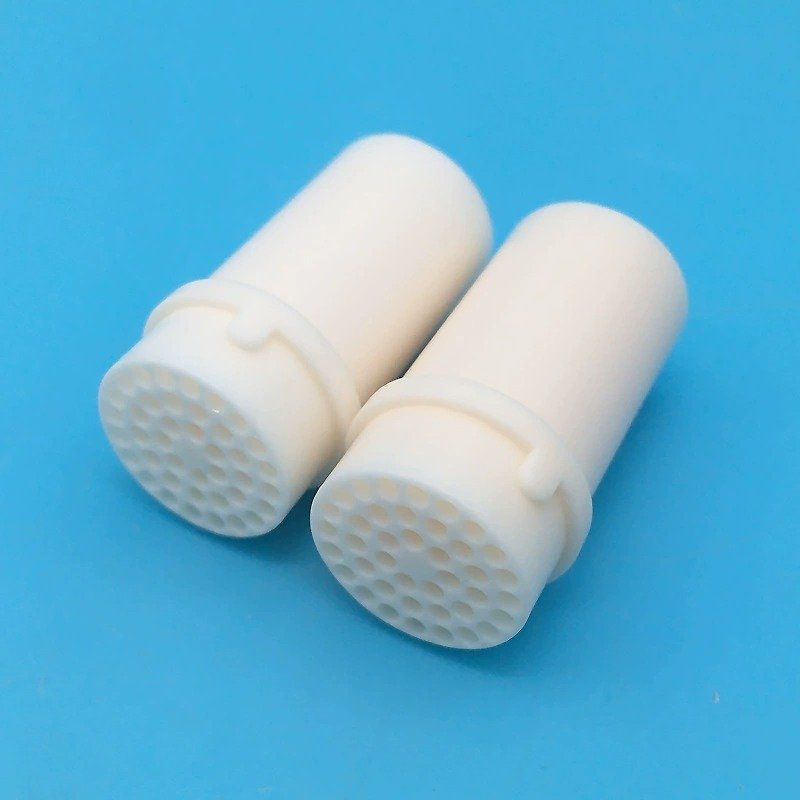
Tell us what the alumina part must survive: voltage, temperature, load, wear, chemicals and assembly method. A drawing is best, but a clear sample photo can start the discussion.
Alumina is often the practical first choice when a component needs electrical insulation, wear resistance, chemical stability or service at elevated temperature. HERUN focuses on custom rods, tubes, rings, sleeves, washers, plates and special shapes rather than forcing an application into a fixed catalogue size.
Tubes, spacers, washers, holders and support parts for electrical isolation and heat exposure.
Guides, plungers, sleeves, plates and contact parts where metal or polymer wear is a problem.
Rings, faces and sleeves where surface finish, flatness and mating geometry must be reviewed together.
Solid rods, pins and shafts supplied to custom diameters, lengths and end details.
Single-bore or application-specific tube geometry for insulation, protection and guiding duties.
Drawing-based parts with steps, holes, grooves, flats or ground working surfaces, subject to manufacturability review.
Purity alone does not determine whether a component will work. Geometry, load, temperature, electrical requirements, surface finish and quantity also affect the practical material and process choice.
| Early design question | Why it matters | What to include in the RFQ |
|---|---|---|
| Is electrical insulation critical? | Purity and operating temperature can change dielectric performance. | Voltage, temperature, wall thickness and environment. |
| Is the part a sliding or abrasive contact? | Surface condition and mating material influence wear. | Motion, load, counterface, speed and expected finish. |
| Are dimensions fit-critical? | Fired ceramics shrink; critical features may need diamond grinding. | Mark only critical tolerances and datum relationships. |
| Is the quantity prototype or repeat production? | Forming and machining routes depend on geometry and volume. | Trial quantity plus expected batch or annual demand. |
HERUN can discuss approximately 0.01 mm tolerance for suitable precision features, but feasibility depends on material grade, geometry, part size, surface requirement and design for manufacture. It is not a blanket tolerance for every feature or part.