Wear
Is contact sliding, abrasive, rolling or particle impact?
A practical selection guide for OEM buyers comparing alumina and zirconia components. Start with wear, load, heat, insulation, chemistry and fit before choosing a grade.
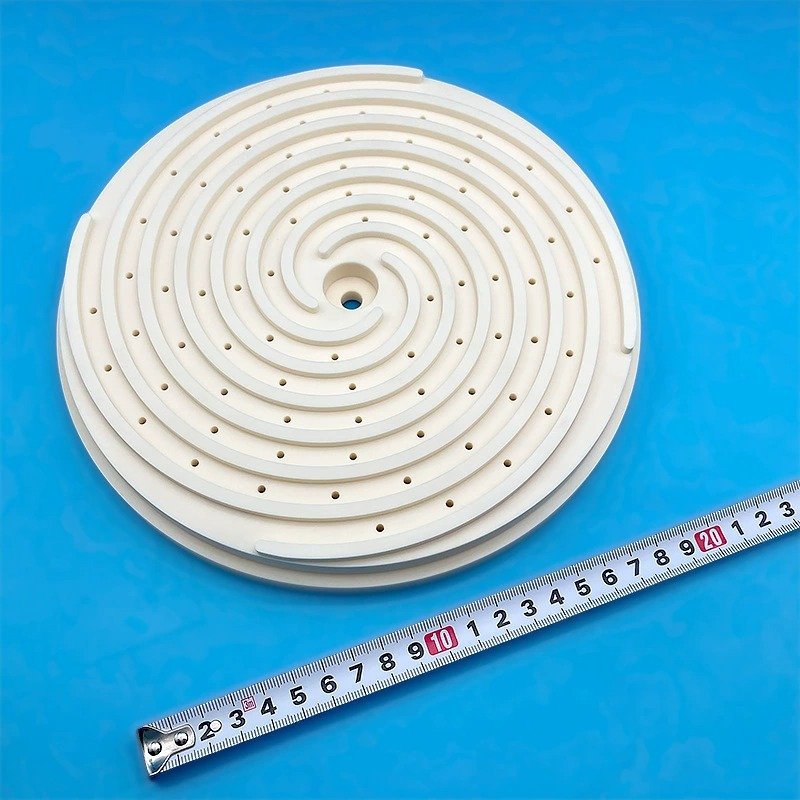
HERUN's main custom strengths are alumina and zirconia. These two material families cover many industrial needs, but they solve different problems. The comparison below is a design-screening tool, not a substitute for grade-specific data and testing.
| Selection factor | Alumina | Zirconia | Questions for the RFQ |
|---|---|---|---|
| Typical reason to choose | Electrical insulation, wear, heat and cost-effective industrial use. | Higher toughness, compact precision parts and smooth sliding surfaces. | What is failing in the current part? |
| Impact and edge sensitivity | Hard and wear resistant, but brittle features need careful design. | Generally tougher than alumina, while still requiring ceramic-friendly geometry. | Are there shocks, thin walls or loaded edges? |
| Electrical behaviour | Commonly used for insulating components. | May suit some insulating duties, but alumina is often the starting point. | What voltage, frequency and temperature apply? |
| Temperature | Often selected for higher-temperature supports and insulation. | Temperature and environment require grade-specific review. | Continuous temperature, peak temperature and atmosphere? |
| Machining and cost | Often the more economical choice for many industrial shapes. | May cost more; can be justified where toughness or finish is important. | Which dimensions are truly critical? |
Published property values vary with purity, stabilizer, test method, supplier and temperature. Final material selection should use the grade data agreed for the order.
Is contact sliding, abrasive, rolling or particle impact?
Is the part compressed, bent, shocked or loaded at an edge?
What are the continuous temperature, peaks and thermal cycles?
Does the part insulate voltage, separate conductors or support a heater?
Which fluids, gases, cleaning agents or process chemicals contact it?
Which dimensions, surfaces and datum relationships control assembly function?
HERUN is positioning the website around its strongest commercial capability: custom precision alumina and zirconia parts. Other advanced ceramics may be discussed for a specific project, but they are not presented here as broad stocked or primary production strengths.
Send the material, critical dimensions, quantity and working conditions. HERUN will review manufacturability before quoting.