Pumps and sealing equipment
Seal rings, sleeves, shafts, wear rings and guiding components exposed to sliding contact or process fluids.
A practical guide to typical alumina and zirconia applications, organized by the engineering problem the component must solve. These are general use cases, not customer case-study claims.
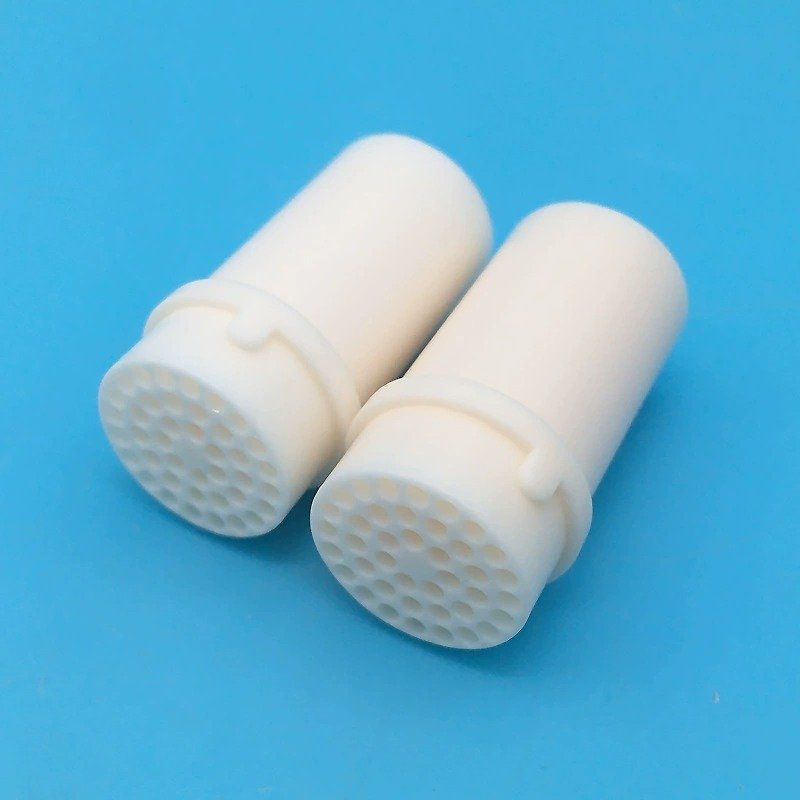
The examples below describe typical industry uses for technical ceramics. They are design starting points, not claims that HERUN has supplied every listed application. Each project still requires material, geometry and risk review.
Seal rings, sleeves, shafts, wear rings and guiding components exposed to sliding contact or process fluids.
Alumina tubes, washers, spacers and supports for insulation and heat exposure.
Pins, guides, plungers, rollers, nozzles and wear parts where dimensional stability matters.
Supports, tubes, plates and fixtures selected for temperature and insulation duties.
Small precision components where chemical stability, clean surfaces or wear resistance are useful.
Nozzles, seats, sleeves and rings reviewed for fluid, chemical, pressure and surface conditions.
| Observed problem | Potential ceramic benefit | Review before choosing |
|---|---|---|
| Metal or polymer wears too quickly | Hard ceramic working surfaces may extend wear life. | Contact type, particles, load, alignment and counterface. |
| Electrical leakage or heat damage | Alumina can combine insulation with temperature resistance. | Voltage, wall thickness, atmosphere and thermal cycling. |
| Compact part chips or fractures | Zirconia may offer greater toughness than alumina. | Impact, edge load, geometry, temperature and grade. |
| Seal or sliding surface degrades | Ground or polished ceramic may provide a stable wear surface. | Fluid, pressure, finish, flatness, speed and mating material. |
An application inquiry is stronger when it includes the current material, failure mode, environment and assembly. If no drawing exists, a measured sketch and sample photos can begin the discussion, followed by a controlled production drawing.
Send the material, critical dimensions, quantity and working conditions. HERUN will review manufacturability before quoting.